Fundamentals
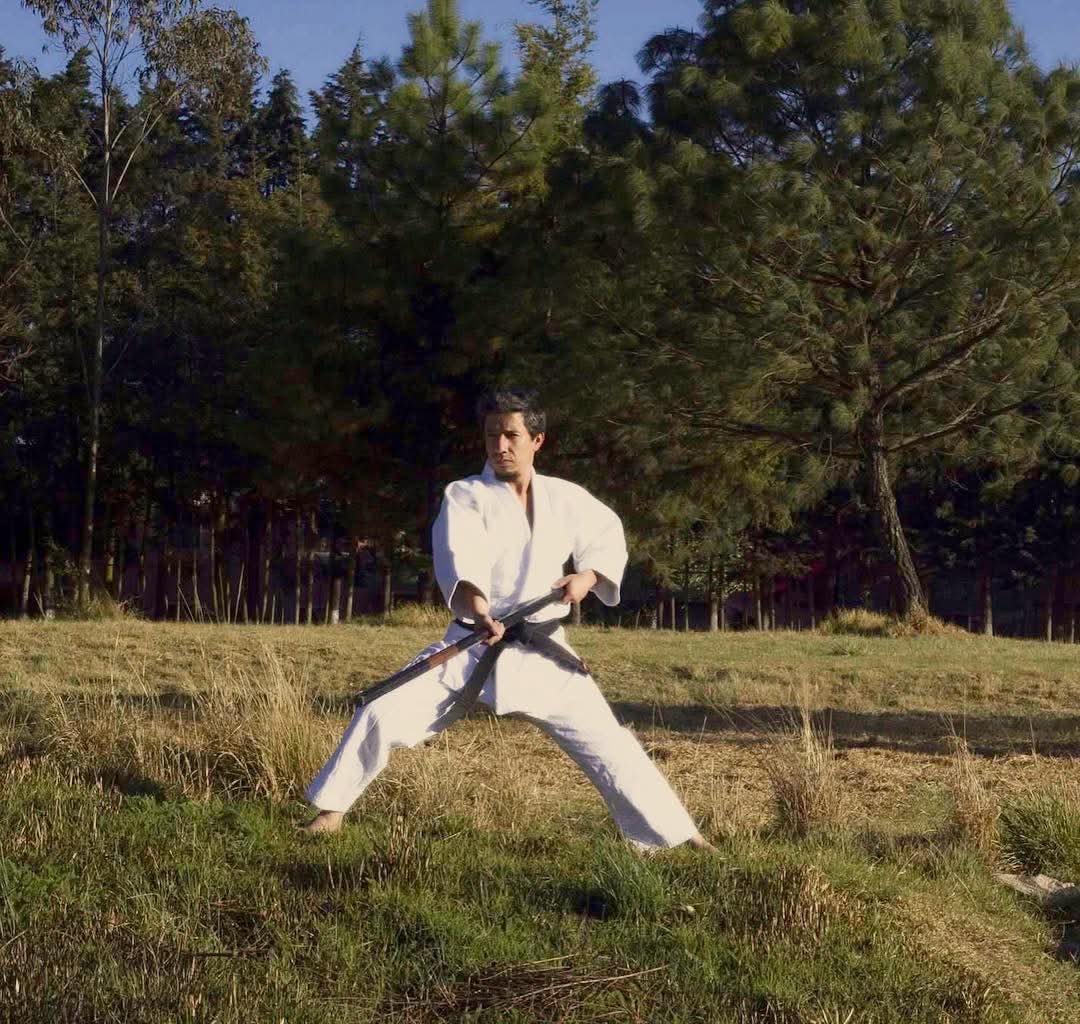
Handling, posture, grip, trajectories, and control before advancing to more complex sequences.
 Ittai Dojo
 Kobudo · Matayoshi tradition
Ittai Dojo teaches Matayoshi tradition Kobudo as part of its offering for adults: an Okinawan system of traditional weapons, with its own progression and a specific affiliation for this discipline.
Origin
Kobudo is the practice of traditional weapons in the Okinawan style. In the West, the term usually refers to that Okinawan form. There is also a Japanese Kobudo from central Japan, with weapons in common with samurai bujutsu—such as the naginata—but that is not what we study here.
Okinawan teaching brings together techniques of the old pechin warriors—a warrior and diplomatic class of the Ryukyu Islands—Chinese teachings, and later adaptations for civil resistance and self-defense after Okinawa was occupied by the Satsuma samurai.
Okinawa was a separate kingdom. It was annexed to Japan. The samurai kept strict control over weapons among the civilian population. That is why some Kobudo weapons are agricultural or everyday tools turned into means of defense. From that comes the idea that Kobudo was created by peasants and that all of its weapons are of peasant origin. In the end, that is a half-truth.
Matayoshi tradition
Matayoshi Kobudo is one of the most important traditions of Okinawan Kobudo. It is associated with Shinkō Matayoshi (1888–1947) and his son Shinpō Matayoshi (1921–1997), heirs to a family lineage that cultivated martial arts for generations.
Shinkō gathered knowledge from various weapons and methods of Okinawa and East Asia. Shinpō—who learned from his father and from other teachers—was the one who didactically coded that legacy as a recognizable style. He traveled to China and later integrated several weapons, as well as the empty-hand forms of the white crane, later known as Kingai-ryū.
The result is one of the best-structured systems of Okinawan Kobudo, and one of those that studies the widest range of weapons.
What is studied
Traditional study includes weapons such as bō, sai, tunkuwa/tonfa, nunchaku, kama, and ēku, as well as other tools and weapons that form part of the historical repertoire of the Matayoshi line.
Practice develops posture, trajectories, coordination, control, distance, footwork, and precision. Fundamentals are built first; then sequences, kata, and applications are integrated progressively.
Handling, posture, grip, trajectories, and control before advancing to more complex sequences.
Forms organize technical principles, coordination, and transitions between movements to build a coherent practice.
Kobudo can accompany the practitioner for years, with attention to precision, health, safety, and personal development.
A living tradition
Shinkō Matayoshi studied traditional weapons in Okinawa and expanded his training during travels outside the island. Among the disciplines he practiced are methods of bō, ēku, sai, kama, nunchaku, and other traditional weapons.
His son Shinpō began training as a child. Decades later he organized that knowledge as a teaching system: in 1970 he helped establish a federation dedicated to Ryūkyū Kobudo, and in 1976 he established the Kōdōkan in Naha, named in honor of his father Shinkō. He continued teaching until his passing in 1997. From Okinawa, his students helped spread this tradition outside Japan.
The history of a martial tradition has different branches and contemporary organizations. Ittai Dojo studies the Matayoshi line within a specific affiliation for Kobudo.
Karate and Kobudo
In Okinawa, the study of karate and Kobudo went hand in hand.
That is what the testimonies of teachers such as Gichin Funakoshi, Kenwa Mabuni, and Chojun Miyagi show. There are records and even photographic evidence of those teachers—and of many others—training with bō, sai, tonfa, nunchaku, and other weapons.
When karate reached central Japan and became Japanized, Kobudo was gradually set aside, mainly for sociopolitical reasons. The great Okinawan teachers who brought karate to Japan, however, trained Kobudo and even taught it in their early years.
If your interest in karate is traditional forms and styles, Kobudo should be an integral part of training. Any traditional karate line is stronger with an understanding of Okinawan Kobudo.
How it fits in
At Ittai Dojo, Kobudo does not replace Kyokushin. It is a different discipline, with its own method of practice and progression. At the same time, karate and Kobudo strengthen each other.
For some students it will complement karate; for others it may become an independent path of study. The system we study—Matayoshi Kobudo—descends from an ancestral tradition, is among the most complete lines in Okinawa, and can be adapted to self-defense in modern life.
Affiliation
Ittai Dojo is affiliated with the International Okinawa Kobudo Kazokukai (IOKK) for the development of Matayoshi tradition Kobudo.
Learn about our Kobudo affiliation →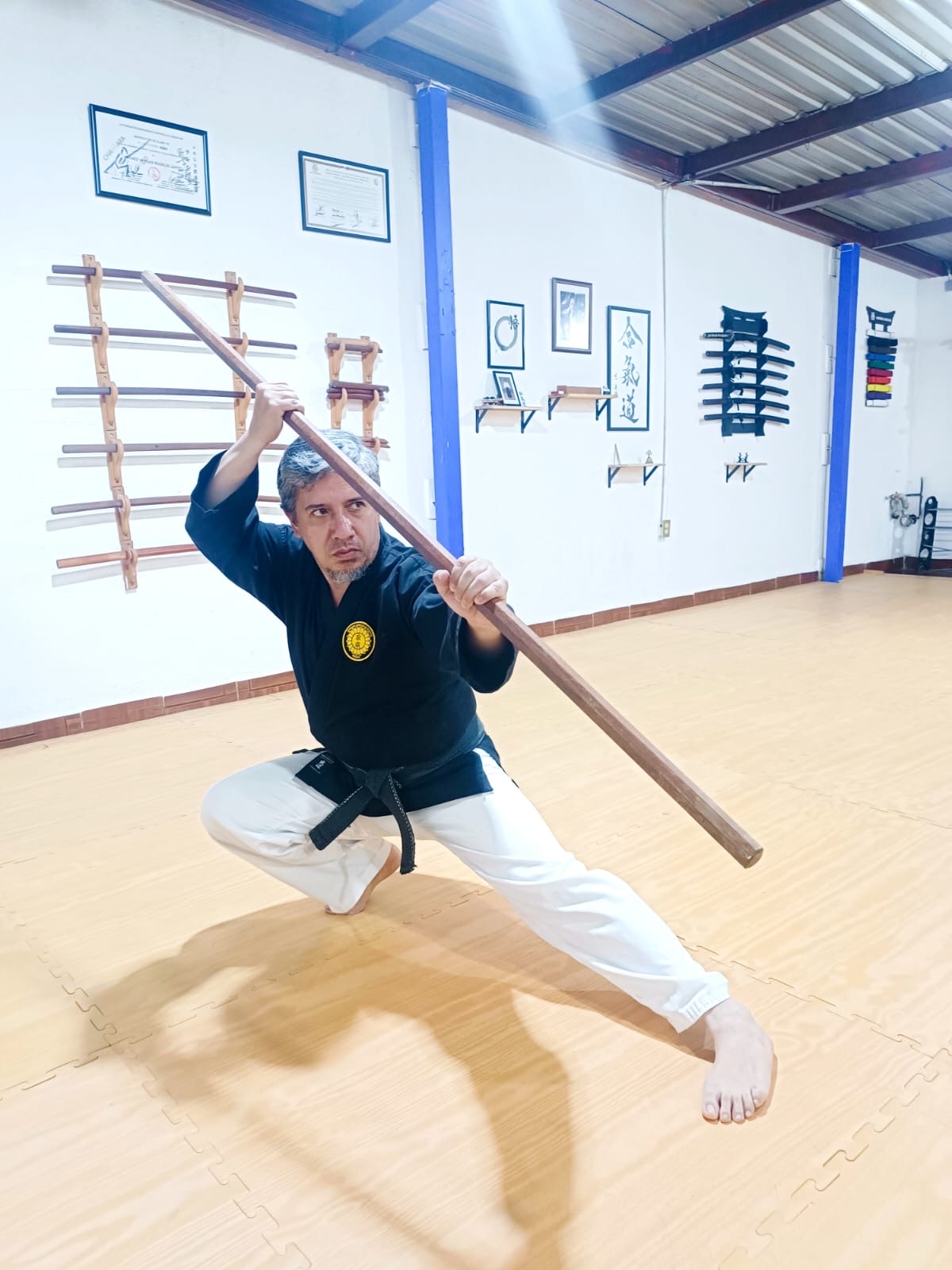
Branch Chief · IOKK Mexico
Branch Chief · Jun Shihan · 3rd Dan · International Okinawa Kobudo Kazoku-Kai México
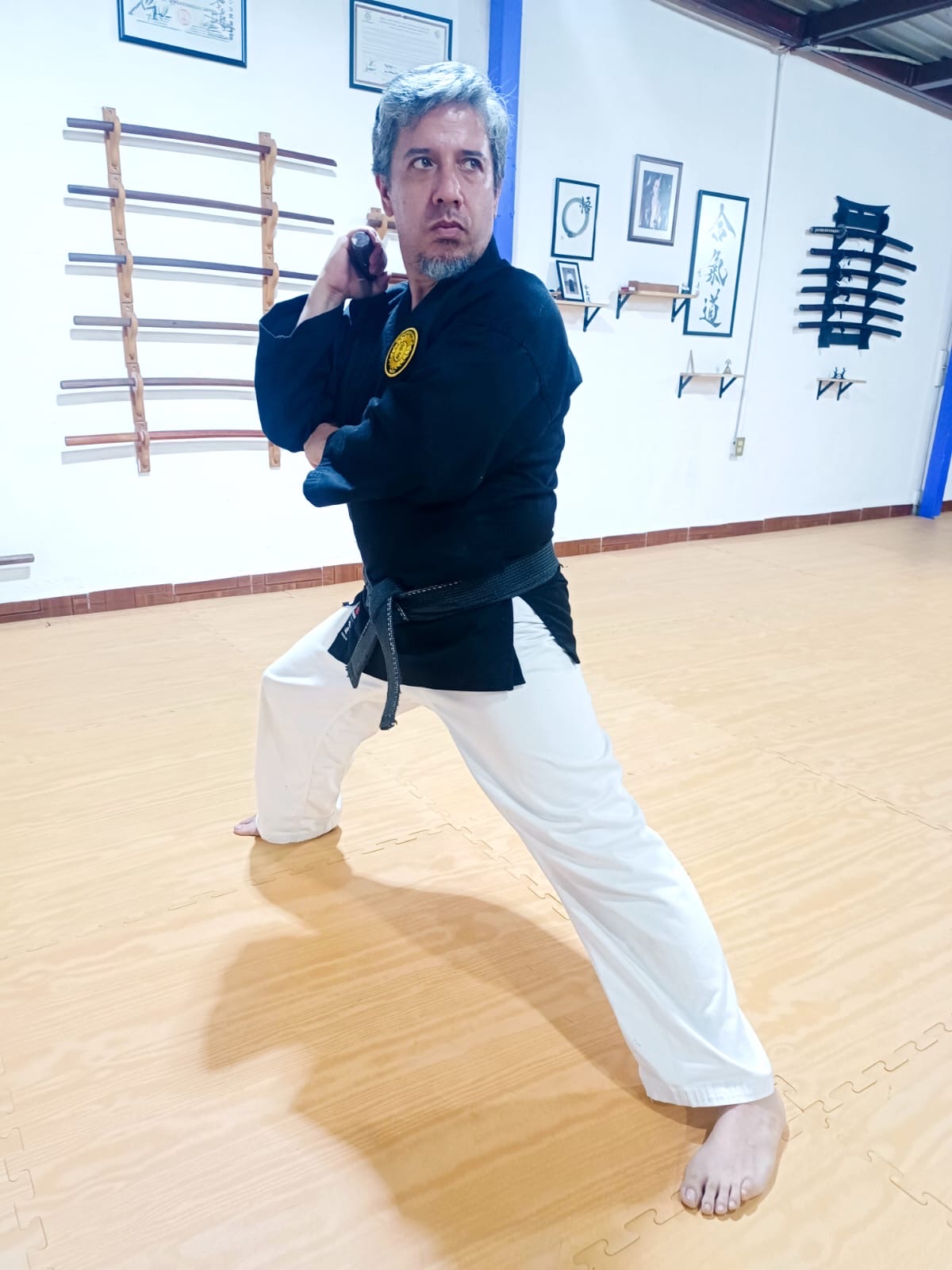
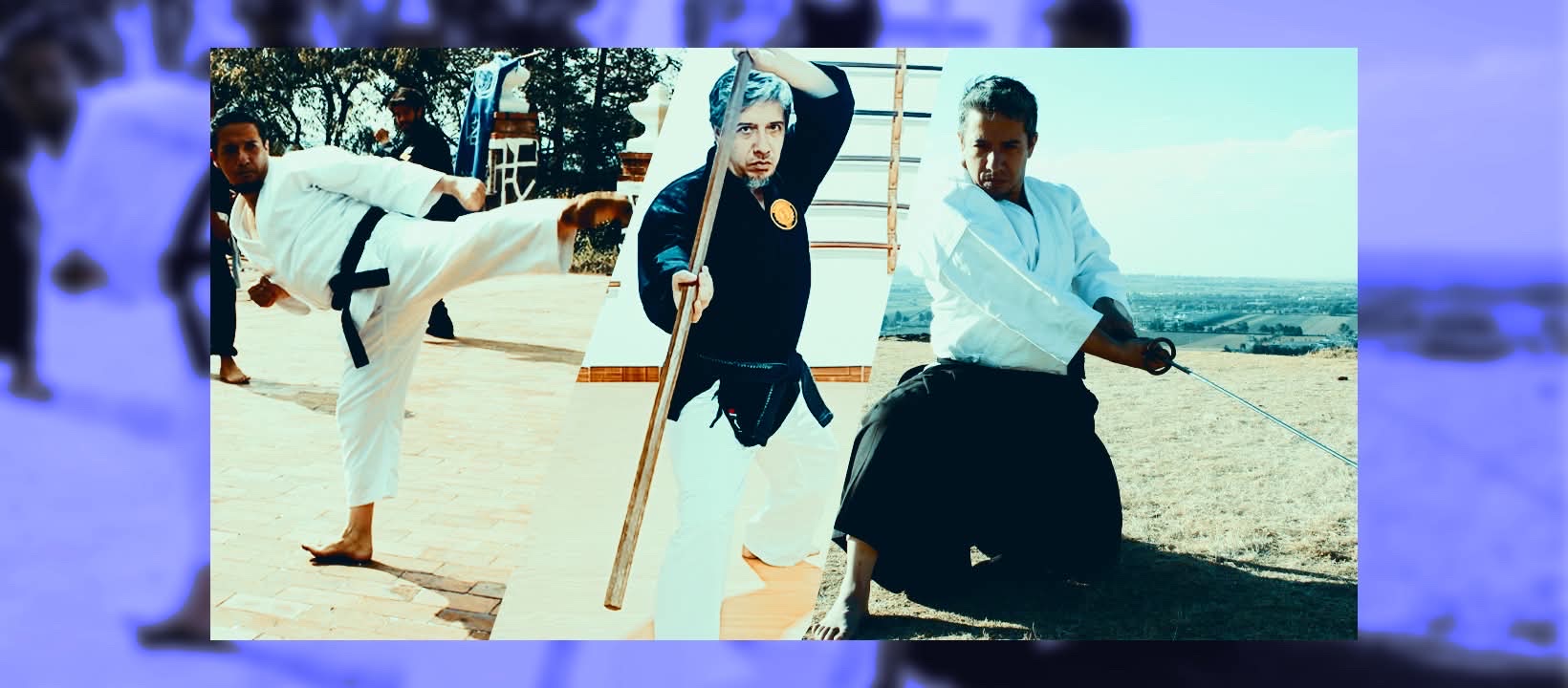
Since April 2026, Alejandro has been Branch Chief / Jun Shihan (3rd Dan) of International Okinawa Kobudo Kazoku-Kai Mexico.
He is head instructor at Tora no Tamashii Dojo, where he has taught Kenjutsu (Japanese swordsmanship), Okinawan Kobudo, and traditional Shotokan Karate for 15 years. He has studied Japanese martial arts for more than 20 years and is creator of the Defensa Zensata self-defense method.
Availability
Ittai Dojo is already teaching Kobudo. The regular schedule is still to be announced.
If you live in Mexico and are interested in participating, you can write to us to register your interest.
Read the announcement → Check availability →History and context
To expand the historical context of Shinkō and Shinpō Matayoshi, we consult material published by organizations dedicated to preserving Matayoshi Kobudo. These historical references are independent of Ittai Dojo's affiliation with IOKK.
Learn about Kobudo
We can notify you when the regular schedule is confirmed and guide you on how to begin.