Awareness, not paranoia
Being aware of your surroundings does not mean looking for threats everywhere. It means noticing people, exits, distances, and changes in a situation without letting fear govern daily life.
 Ittai Dojo
 Discipline · Self-defense
For us, self-defense is not about winning fights or collecting techniques. It is about developing the ability to recognize problems, make decisions, and keep functioning when a situation becomes uncertain.
The goal
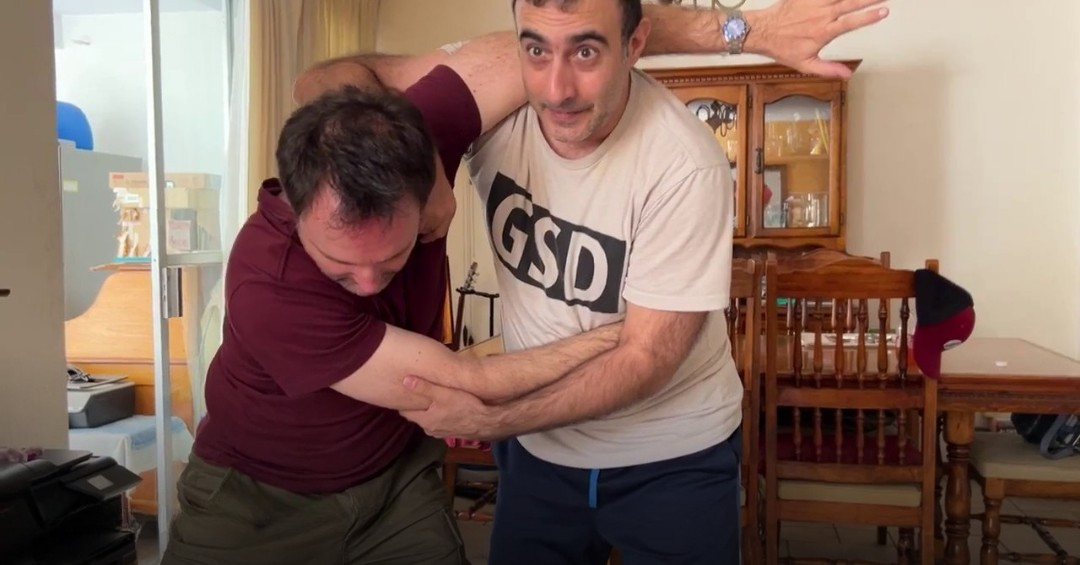
A real situation has no referee, rules, or predictable outcome. So the goal is not to prove who is stronger. It is to protect yourself, protect those who depend on you, and find the opportunity to leave safely.
Self-defense begins long before the first strike: with awareness, positioning, boundaries, prevention, and the ability to recognize when a situation is escalating. Ideally, it ends before violence becomes necessary.
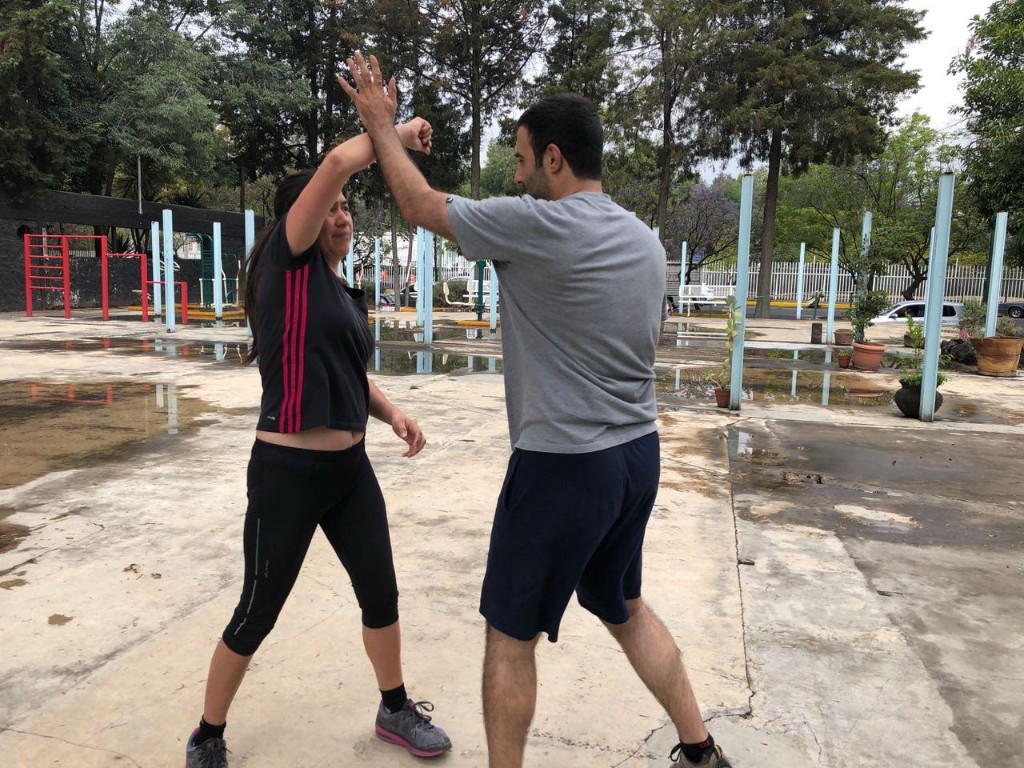
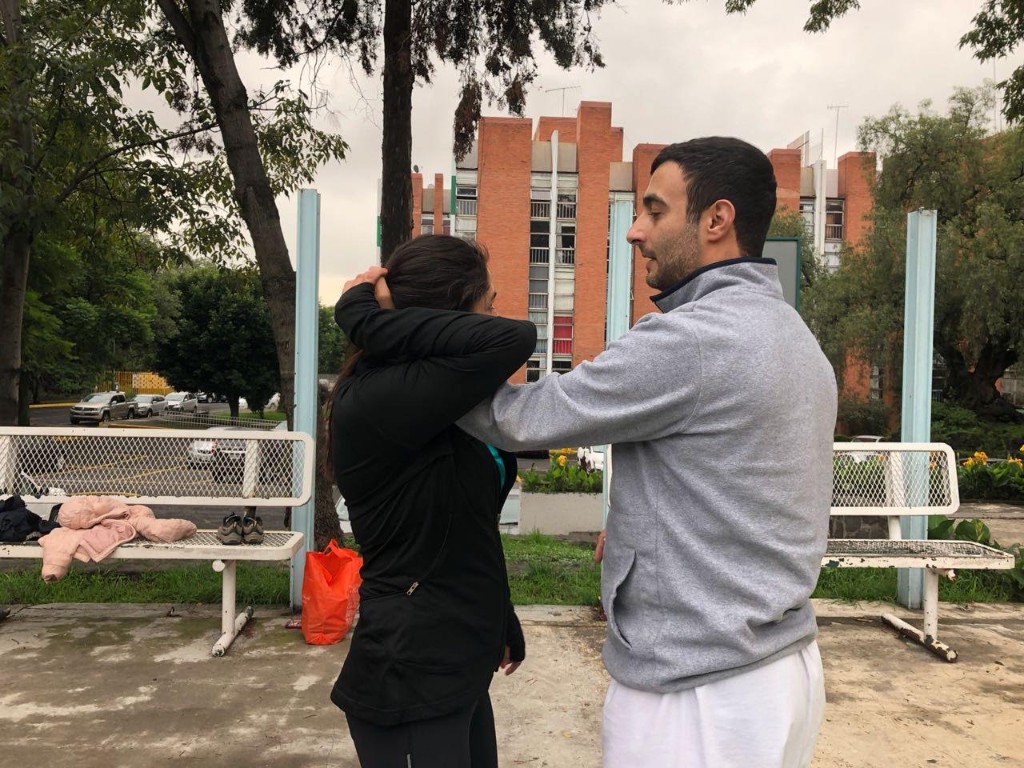
Being aware of your surroundings does not mean looking for threats everywhere. It means noticing people, exits, distances, and changes in a situation without letting fear govern daily life.
The best response is not always to confront. Better positioning, setting a boundary, creating a barrier, buying time, or moving toward an exit can be far more important than executing a perfect technique.
Knowing a technique in cooperative conditions does not mean you can use it under stress. We train to keep enough clarity to move, adapt, and decide while there is resistance, fatigue, confusion, or discomfort.
Many responses have a simple purpose: create enough space to think, move, and escape. Sometimes that requires talking. Sometimes pushing, striking, or fighting for a few seconds. There is no universal answer.
Train with honesty
Violence is unpredictable. People resist, improvise, and react in ways an orderly demonstration cannot reproduce.
That is why practice needs to introduce resistance and pressure progressively and in a controlled way. Not to brutalize training, but to discover what still works when things stop being comfortable.
Pressure teaches something theory cannot: how your body responds, how your judgment changes with fatigue, what happens when someone is stronger, and above all—that you can still function while uncomfortable.
Good training should not make you feel invincible. It should give you a more realistic view of your capabilities and help you build them.
SPACE framework
SPACE is a way to organize practice and decision-making under pressure. It is not a collection of techniques or a formula that guarantees safety.
Situational awareness
Attention to the environment and early recognition of changes and risks.
Positioning
Using distance, orientation, exits, barriers, and space to keep options open.
Adaptation under pressure
Continuing to think and adjust the response when the initial plan stops working.
Creating distance
Generating enough physical space and time to recover options.
Escape when possible
Remembering that leaving safely is the goal—not staying to win a confrontation.
Responsibility
This way of understanding self-defense arose, in part, from recognizing the limits of traditional martial training. Knowing how to fight does not automatically answer what to do when you are with your partner, carrying a child, in a confined space, or responsible for someone else.
Responsibility forces you to think beyond yourself: where are the people with you, how to move together, what to do if you are separated, and when to act. Good protection is often quiet: preparation, awareness, positioning, and readiness to act when necessary.
Preparedness without fear
Over time, serious practice should produce more calm and better judgment—not more interest in violence. Preparing means reducing panic through experience, developing capability, and learning to keep options when things get complicated.
Self-defense remains a practice, not a final state. No course, system, or martial art can guarantee safety. What we can do is train with honesty, pay attention, and build capability that is available when it truly matters.
Practice
A playlist of Ittai Dojo self-defense videos: distance, posture, reaction, and decision-making.
Self-defense programs
Ittai Dojo offers self-defense courses, seminars, and sessions for adults, women, groups, and companies in Mexico.